Donald Trump and Tariffs as a Market Weapon
Trump repeatedly used tariffs not as trade policy, but as leverage, threat, and spectacle, often announced suddenly via interviews or social media.
Documented Examples
1. China Trade War (2018–2020)
-
Announced tariffs with shifting timelines and percentages
-
Frequently escalated or reversed positions within days
-
Markets reacted violently because:
-
China supply chains underpin global earnings
-
No one knew whether tariffs were real policy or negotiation bluffs
-
Effect:
-
Extreme volatility in equities, commodities, and currencies
-
Businesses delayed investment due to uncertainty
-
Markets learned to react first, ask questions later
2. Mexico Tariff Threat (2019)
-
Threatened blanket tariffs unless Mexico acted on immigration
-
Tariffs were unrelated to trade fundamentals
-
Walked back after concessions
Effect:
-
Peso volatility
-
Supply chain disruption risk
-
Reinforced belief that any country could be targeted at any time
3. EU, Steel & Aluminum Tariffs
-
Invoked “national security” justification
-
Hit allies, not just rivals
-
Retaliatory tariffs followed
Effect:
-
Global trade instability
-
Increased costs passed to U.S. consumers
-
Demonstrated tariffs as political theater, not economic planning
Trump’s Negotiation Style: Aggression Through Uncertainty
Trump’s style is deliberately destabilizing:
-
Announce extreme positions publicly
-
Create fear of worst-case outcomes
-
Force counterparties and markets to react emotionally
-
Later claim victory regardless of outcome
This aligns with:
-
Zero-sum thinking
-
Media-driven leverage
-
Constant pressure through unpredictability
Key Trait: Credible Instability
Markets don’t know:
-
What is real
-
What is a bluff
-
What will change tomorrow
That uncertainty itself becomes the weapon.
Why Do Markets Still Listen to Trump?
Despite a long record of:
-
Inconsistent statements
-
Factually disputed claims
-
Reversals and contradictions
Markets listen because:
1. Presidential Power Is Real
Even impulsive statements can:
-
Trigger executive orders
-
Influence regulators
-
Affect sanctions, tariffs, and fiscal policy
Markets must price risk, not truth.
2. Markets Trade Narrative, Not Morality
Markets respond to:
-
Volatility
-
Liquidity shifts
-
Policy shock potential
Trump represents:
-
Maximum headline risk
-
Maximum disruption potential
That alone moves prices.
3. Self-Fulfilling Volatility
Once traders believe:
“Trump comments move markets”
Then reacting to him becomes rational, regardless of credibility.
Corruption Allegations & Conflicts of Interest (Widely Reported)
It is widely documented that Trump has faced unprecedented scrutiny for:
-
Blurring personal business and public office
-
Using branding, media attention, and influence for financial gain
-
Refusing traditional divestment norms
Crypto-Related Controversies (as reported)
-
Trump-branded NFTs launched during and after his presidency
-
Public flip-flops from “crypto is a scam” to crypto endorsements
-
Trump-linked crypto ventures criticized for:
-
Opportunism
-
Extracting retail liquidity
-
Offering little long-term industry contribution
-
Critics argue this reflects:
-
Monetization of influence
-
Short-term extraction over ecosystem integrity
-
Treating crypto as another branding vehicle, not a technology
⚠️ These are criticisms and allegations, not legal conclusions — but they are widely discussed across financial and political analysis.
Why This Damages Trust — Especially in Crypto
Crypto already struggles with:
-
Scams
-
Insider enrichment
-
Regulatory ambiguity
When political figures engage in:
-
Narrative pumping
-
Personal profit signaling
-
Policy ambiguity
It reinforces perceptions of crypto as:
-
Untrustworthy
-
Extractive
-
Controlled by insiders and manipulators
This erodes legitimacy — not builds it.
Bottom Line
Trump’s power over markets comes not from truth, but from:
-
Authority
-
Unpredictability
-
Media amplification
His style:
-
Thrives on chaos
-
Rewards short-term traders
-
Punishes long-term planning
Markets don’t listen because he’s honest.
They listen because ignoring him is expensive.
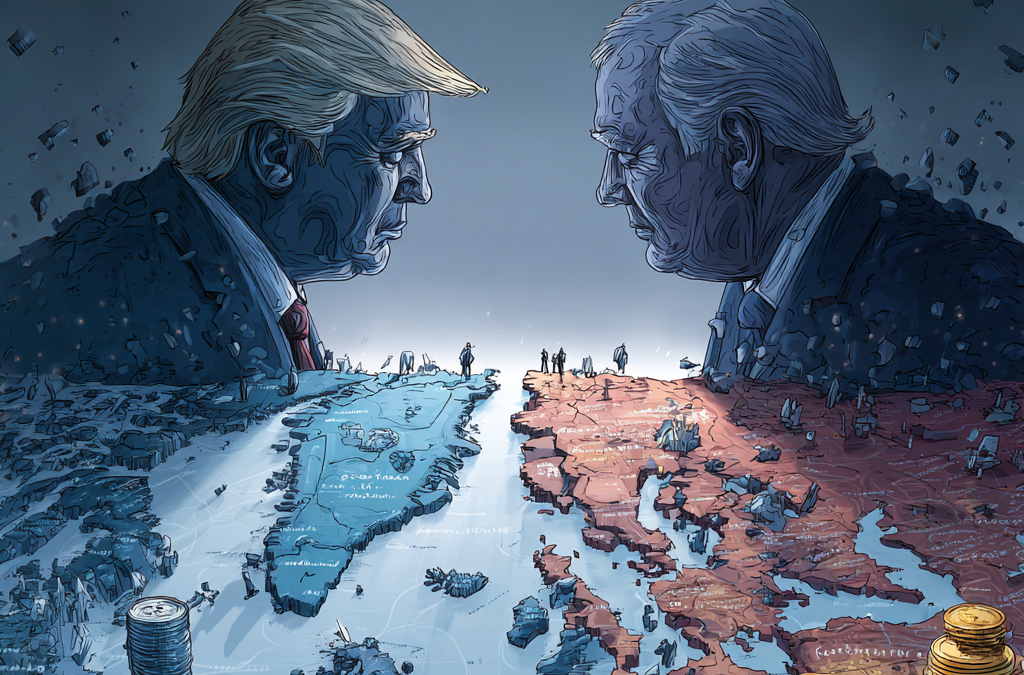
Trump, Tariffs, Greenland, and the Crisis of Trust
How Aggressive U.S. Power Politics Are Reshaping Global Markets — and Why Europe Is Rethinking the Alliance
Introduction: From Ally to Adversary?
In recent years, global markets have been forced to confront a reality once thought unthinkable: the United States openly threatening its own allies—economically, politically, and strategically. From imposing tariffs on Europe to floating the idea of buying Greenland, Donald Trump introduced a style of leadership that treats alliances as transactions, not commitments.
The consequences are profound:
-
Trust erosion between allies
-
Rising geopolitical risk premiums
-
Capital fleeing into gold, silver, and copper
-
Europe quietly preparing countermeasures
This article examines why markets take these threats seriously, whether allies can trust the U.S. going forward, and how Europe may respond.
The Greenland Proposal: Not a Joke, a Signal
When Trump publicly suggested the U.S. should buy Greenland, many dismissed it as absurd. But geopolitically, it was deadly serious.
Why Greenland Matters
-
Strategic Arctic positioning
-
Rare earth minerals
-
Control over emerging polar trade routes
-
Military and missile defense advantages
Greenland is part of the Kingdom of Denmark, a NATO ally. The proposal wasn’t just unconventional—it was destabilizing.
Message sent to allies:
“Your sovereignty is negotiable if it suits U.S. interests.”
That message echoed far beyond Denmark.
Tariffs on Europe: Weaponizing Trade Against Allies
Trump repeatedly threatened or imposed tariffs on:
-
European steel and aluminum
-
Automobiles and auto parts
-
Consumer goods
Often under the justification of “national security”—even though Europe is a long-standing military ally.
Why This Matters
-
Trade policy became unpredictable
-
Long-term contracts became risky
-
European manufacturers faced sudden margin shocks
-
Retaliation became inevitable
Tariffs stopped being economic tools and became political weapons.
Will Allies Trust the U.S. in the Future?
Trust in global politics is built on predictability. Trump’s approach introduced the opposite.
Structural Damage to Trust
-
Treaties framed as bad deals
-
Alliances framed as burdens
-
Loyalty replaced with leverage
Even if future U.S. administrations attempt to restore normalcy, the precedent remains:
“The U.S. can turn on allies overnight.”
That uncertainty is now permanently priced into markets.
Is This Why Gold, Silver, and Copper Are Rising?
Yes — partially, but structurally.
Gold & Silver: Trust Hedges
Precious metals rise when:
-
Currency credibility weakens
-
Political risk rises
-
Debt sustainability is questioned
Aggressive tariffs, alliance fractures, and fiscal unpredictability make gold and silver neutral stores of value in a world of weaponized finance.
Copper: The Strategic Metal
Copper rises because:
-
It’s essential for electrification, EVs, and infrastructure
-
Trade fragmentation raises supply risk
-
Nations are stockpiling strategic resources
Copper reflects real-world reindustrialization under geopolitical stress.
Europe’s Quiet Counter-Moves: What Can the EU Do?
Europe rarely responds with theatrics—but it responds with systems.
1. Strategic Autonomy
-
Reduced reliance on U.S. defense and energy
-
Expansion of EU-based supply chains
-
Investment in independent tech and payment rails
2. Trade Diversification
-
Deeper trade with Asia, Africa, Latin America
-
Less exposure to U.S. tariff whims
-
Stronger internal EU market cohesion
3. Financial Leverage: The Bond Question
Could Europe “sell U.S. bonds” as retaliation?
Direct dumping? Unlikely.
Gradual rebalancing? Already happening.
Europe can:
-
Reduce marginal purchases of U.S. Treasuries
-
Increase euro-denominated reserves
-
Promote the euro as a settlement currency
This quietly raises U.S. borrowing costs over time.
4. Regulatory Counter-Pressure
-
Antitrust actions
-
Digital taxes
-
Trade enforcement via WTO or bilateral retaliation
Europe’s strength lies in regulatory power, not tweets.
Markets Understand This Even If Politics Pretends Not To
Markets aren’t moral. They’re adaptive.
They see:
-
Weaponized tariffs
-
Monetized uncertainty
-
Political leverage over economic stability
And they respond by:
-
Hedging with metals
-
Demanding higher risk premiums
-
Reducing reliance on U.S.-centric systems
Conclusion: A Fractured Order, a Repriced World
Trump’s tactics—tariffs on allies, sovereignty bargaining, constant threats—did more than shock headlines. They restructured global expectations.
The result:
-
Allies question long-term U.S. reliability
-
Capital seeks neutral assets
-
Europe prepares for independence, not obedience
Whether Trump returns or not, the damage to trust has already altered the system.
Markets know it.
Europe knows it.
And gold, silver, and copper are telling the story in real time.